Data silos: why they form, what they cost, and how to break them without a migration
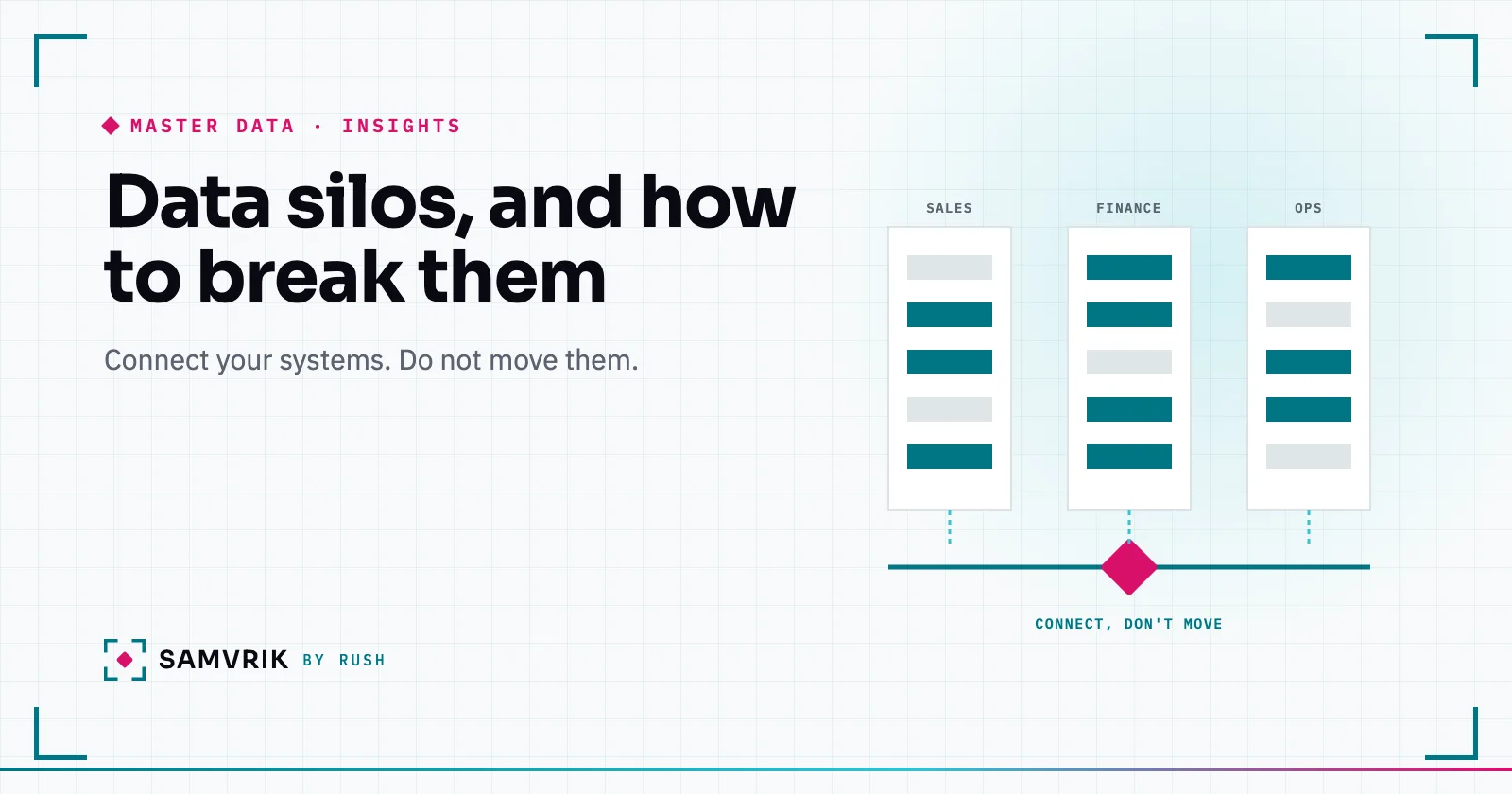
A data silo is data held by one team or system that others cannot easily see or use. Silos form naturally as companies grow. You break them by connecting systems, matching the records they share and agreeing definitions, not by moving everything into one new database.
Sales has the CRM. Finance has the ERP. Operations has its own tracker. Each one works for the team that owns it. The trouble starts when a question needs all three.
That is a data silo: information that sits with one team or one system, out of reach of everyone else. This guide explains why silos form, how to spot them, what they really cost, and how to break them without a long migration.
What a data silo is
A data silo is any store of data that other teams cannot easily see, trust or combine with their own. It can be a whole system, like a regional ERP. It can be a single spreadsheet on one person's laptop that the monthly report depends on.
Silos are not a sign of a badly run company. They are what happens when teams buy the best tool for their own job, one at a time, over years.
Why silos form
- Each team buys its own tool. The tool fits the team, but nobody plans how it will share data.
- Acquisitions bring new systems. The bought company keeps its own ERP and customer list.
- Definitions drift. "Customer", "order" and "revenue" mean slightly different things in each team.
- No shared identifiers. The same customer has a different ID in every system.
- Access is locked for good reasons. Security and privacy rules keep data apart, and nobody builds a safe way to combine it.
Signs you have them
Tick each statement that is true in your company.
What silos cost
The cost rarely shows up as a line in a budget. It shows up as slow decisions and lost trust.
- Time. Skilled people spend days each month copying, matching and checking data by hand.
- Trust. When numbers disagree, leaders stop trusting any of them, and meetings become arguments about whose spreadsheet is right. Our guide to a single source of truth shows why this happens with an example.
- Missed signals. A supplier price rise in one system and falling margins in another are only connected when someone spots both.
- Compliance risk. If you cannot find every copy of a person's data, you cannot honour a request to correct or erase it. That matters under the DPDP Act, and it matters more once consent managers start sending withdrawals.
How to break them, in five steps
- Start with one painful question. "What is our real margin by customer?" is better than "fix all our data".
- Connect the systems you need for it. Read the data where it sits. You do not need to switch anything off.
- Match the shared records. Make sure each customer, supplier and product is recognised as one thing across systems. This is called entity resolution.
- Agree the definitions. Write down what each key number means, and who owns it.
- Publish one version. Let every team and report read from it, and retire the side spreadsheets one by one.
Who should own it
Silos break when someone is responsible for the space between teams. That is rarely IT alone. A good setup has three roles:
- A business owner for each key number. The finance lead owns "revenue". The sales lead owns "active customer". They decide what the definition is.
- A data steward for each shared list. Someone who approves unclear matches and fixes bad records, such as a customer master or supplier list.
- A technical owner for the connections. The person who keeps the systems linked, the access controlled and the logs on.
Write these names down. When two numbers disagree later, everyone knows who decides.
What you can do in the first 30 days
- List the five reports leaders use most, and the systems each one depends on.
- Find the one number that differs most between teams, and write its agreed definition.
- Take a sample of customer records from two systems and count how many match cleanly. That number tells you how big the matching job is.
- Pick one side spreadsheet and replace it with a direct read from the source system.
Why "one big system" usually fails
The tempting fix is to replace every system with one new platform. It rarely works. Migrations take years, teams lose tools that fit their jobs, and new silos form around the gaps before the project ends.
Connecting is faster and safer. Systems stay where they are, and a shared layer on top matches the records and agrees the numbers. That is the idea behind master data management, and the right data governance tool keeps it controlled.
Where Samvrik fits
Smelter reads your systems where they sit, matches the records they share, and publishes one agreed version that every team reads. Each value shows where it came from. It all runs inside your own environment, so silos kept apart for security reasons can be combined safely. See how Smelter works.
Common questions
What is a data silo?
A store of data held by one team or system that other teams cannot easily see, trust or combine with their own. It can be a whole system or a single spreadsheet.
Why do data silos form?
Usually because each team buys the best tool for its own job, companies acquire businesses with their own systems, and nobody plans shared definitions or shared IDs.
Do you need to replace your systems to break data silos?
No. Connecting systems where they sit, matching the records they share and agreeing definitions is faster and safer than migrating everything into one new platform.
How are data silos and master data management related?
Master data management is one of the main ways to break silos. It gives customers, suppliers and products one agreed record across every system.